Music Canada

Gold & Platinum

Join Mailing List

Music Canada

Gold & Platinum

 Music Canada

News

view

The Sheepdogs & MusiCounts Celebrate Funds Raised for Niagara-area School Music Programs through Hockey Night in St. Catharines

Yesterday in St. Catharines, MusiCounts held a Band-Aid Celebration event at the DSBN Academy, which featured a special performance by three-time JUNO Award winners The Sheepdogs. The event was celebrating the $30,000 raised for MusiCounts through Hockey Night in St. Catharines 2014, supported by Music Canada and Partridge Wealth Management. DSBN Academy was one of three Niagara-area schools to receive $10,000 worth of instruments through MusiCounts’ Band-Aid Grant program, which has granted $595,000 worth of in musical instruments to 69 schools across Canada this year.

Local MP and Parliamentary Secretary to the Minister of Heritage Rick Dykstra is the organizer of Hockey Night in St. Catharines, and was on hand to speak to the importance of music education and the impact that music can have in a community.

“Every year I have been amazed at the success of Hockey Night in St. Catharines and through United Way of St. Catharines and District, how we have been able to help fund vital programs for the disadvantaged in our community. But what is happening here today is pure magic,” said Dykstra. “Getting instruments into the hands of young people and giving them the gift of music is something that will enrich them all of their lives. I cannot thank MusiCounts, Music Canada and Partridge Wealth Management enough for helping all of this come together and I especially want to thank Ewan and Shamus Currie of The Sheepdogs for taking time out of their schedules to be with us on this very special day.”

During their performance, The Sheepdogs’ Ewan and Shamus Currie spoke of their own experience with music education growing up, and offered some advice to students at DBSN.

“Obviously music is a great opportunity, whether it’s a job or just a really awesome pastime or hobby,” said Ewan in an interview with Cogeco News. “I just want them to realize that maybe it seems difficult and a bit structured at first when you’re learning scales, and starting off with the basic building blocks, but it’s really a pathway that leads you to a lot of enjoyment and a really cool way to spend your time.”

Music Canada and our members Sony Music Entertainment Canada, Universal Music Canada, and Warner Music Canada are proud supporters of the Band Aid Grant program. This is the third year of Music Canada’s partnership with MusiCounts, following a 2012 pledge of $250,000 over the next three years, which supports music education programs in schools in across the country.

Music education is a key priority of Music Canada as one of our five strategies in The Next Big Bang report, which recommends that given the strong evidence that music education prepares workers who are more creative, better problem-solvers, and possess soft skills that are critical in the digital economy, as well as the correlation between music scenes and tech clusters, governments should invest more in music education and should consider music scenes as a tool for economic development.

For more on the event, see coverage from TV Cogeco Niagara, Newstalk 610’s Larry Fedoruk Show, and the St. Catharines Standard, and the social media highlights below.

Comments
view

Global Forum 2015: The Survival of the Creative Class

The Global Forum at Canadian Music Week has earned a reputation as a hub for insightful commentary on issues pertinent to creators and the creatives industries. In recent years, the Global Forum has discussed grassroots advocacy with Blake Morgan, brand supported piracy with David Lowery, Chris Ruen, and Chris Castle, strategies for eliminating the digital theft of cultural content with Robert Levine and Dr. Brett Danaher, and how corporations enable digital theft with filmmaker Ellen Seidler. Music Canada is proud to return as a sponsor of the Global Forum, which features a compelling group of panelists for the 2015 edition.

For ten years or more we have heard about the importance of the creative class: that it is essential to the growth and success of businesses, as well as cities and regions. Cities that don’t attract the creative class, apparently fail.

But have we forgotten the fundamental elements of survival? Attracting the creative class is one thing but its members must be able to afford to work in their fields.

Scott Timberg is one of a growing number of people who say the creative economy is broken. According to Timberg, it is virtually impossible for creative artists from musicians to filmmakers, to journalists and book sellers, to earn a living. And the impacts are far-reaching.

Zoë Keating has experience trying to make a living as a full-time musician. A Canadian cellist, Keating didn’t set out to become an artist advocate but was thrust into the spotlight when she refused to back down against one of the largest intermediaries of music, YouTube, over her right to control how and when her music is distributed.

Blake Morgan is no reluctant advocate and since his appearance at The Global Forum in 2014, has seen his I Respect Music campaign log a major success with the recent introduction of bipartisan legislation in the U.S. to ensure artists are fairly paid on digital services and AM/FM radio.
Is survival of the creative class at risk? Has the artist middle class disappeared?
If so, at what cost? And what can we do about it?

Kate Taylor, a columnist with The Globe and Mail and frequent writer on technology, the media and music, will lead the panel in an hour-long discussion. The panel will be followed by moderated table discussions on potential solutions.

Update: video from the panel is now available online, and is embedded below.

Comments
view

PANAMANIA Set to Take Over Toronto this July and August

Toronto’s over-flowing music scene is set to get even busier this summer thanks to the announcement of PANAMANIA. The arts and culture celebration runs in conjunction with the 2015 Pan Am and Parapan Am Games – running July 10-26 and August 7-15, respectively.

At a press event on Wednesday, organizers detailed the extensive programming that runs the gamut of music, theatre, dance, visual arts, and fashion. The PANAMANIA activity will be highlighted by free shows at Nathan Phillips Square, CIBC Pan Am Park at the Exhibition Grounds, and the Distillery District, as well as ticketed presentations (including 28 commissioned world premieres) happening across Toronto.

It’s great news for music fans who will have the opportunity to see headlining performances from acts representing Toronto’s rich cultural diversity. It’s not just Toronto artists that will take the stage though, with PANAMANIA roping in some major acts from across the 41 PASO member nations.

Included are performances by The Flaming Lips, The Roots, Janelle Monae, Death From Above 1979, Chromeo, Joel Plaskett Emergency, Lights, Half Moon Run, Cold Specks, Jully Black, Kassav’, Tanya Tagaq, Jann Arden, A Tribe Called Red, Explosions in the Sky, USS, Trombone Shorty, Colin James, Dragonette, ChocQuibTown, Ondatropica, Lila Downs, Luciano, Marie-Pierre Arthur, Café Tacvba, Antibalas, Charles Bradley & his Extraordinaires, Calle 13, Damien Robitaille, Radio Radio, BADBADNOTGOOD, Brigitte Boisjoli, and much more.

With 35 days of entertainment on the schedule, the programming is an exciting reminder of Toronto’s vibrant music scene – something the government and Pan Am organizers are eager to showcase. Speaking at the press event, Minister of Tourism, Culture and Sport Michael Coteau said: “The world will be looking at Ontario.”

To see the entire lineup, we have full listings at OntarioLiveMusic.ca.

Loading…

More information on PANAMANIA can be found on the TO2015 site.

Comments
view

Canadian Music Industry Hall of Fame Inductees Steve Kane and Cowboy Junkies Recognized at Queen’s Park

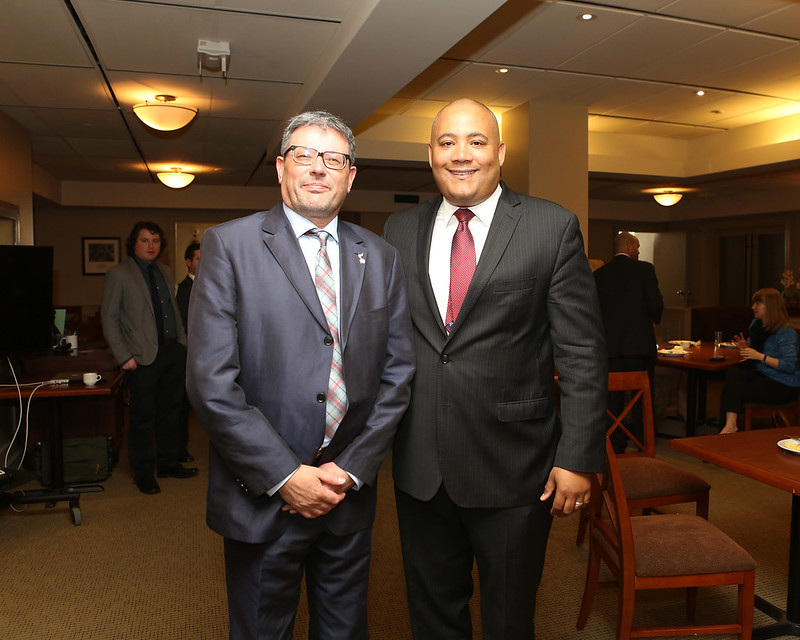
This morning, 2015 Canadian Music Industry Hall of Fame inductees Steve Kane and Cowboy Junkies were recognized at a breakfast event at Queen’s Park, which was well attended by more than thirty Members of Provincial Parliament from all three parties.

IMG_2395 Premier Kathleen Wynne dropped by the 2015 Canadian Music Industry Hall of Fame breakfast to honour the new inductees Cowboy Junkies and Steve Kane, President of Warner Music Canada.

IMG_2432 Premier Kathleen Wynne dropped by the 2015 Canadian Music Industry Hall of Fame breakfast to honour the new inductees Cowboy Junkies and Steve Kane, President of Warner Music Canada.

Amy Terrill, Music Canada’s VP of Public Affairs, provided welcoming remarks, commending the Ontario government for extending the Ontario Music Fund in the provincial budget last month, and reiterating Music Canada members’ commitment to continue to use the Fund to drive investment and job creation in Ontario’s music sector.

The Hon. Michael Coteau, Minister of Tourism, Culture and Sport, also spoke at the event, noting that Ontario generates more than 80 per cent of Canada’s total recording industry revenue, which is a competitive advantage for the province.

IMG_2424 Premier Kathleen Wynne dropped by the 2015 Canadian Music Industry Hall of Fame breakfast to honour the new inductees Cowboy Junkies and Steve Kane, President of Warner Music Canada.
After the event, Steve Kane and Cowboy Junkies’ Margo Timmins and Michael Timmins sat in the gallery of the legislature for Question Period, where they were introduced in statements by Sophie Kiwala, MPP, Kingston and the Islands, and Bill Walker, MPP, Bruce-Grey-Owen Sound.

During the event, several MPPs took the opportunity to pose for photos with the inductees, which were shared on Twitter:

Comments
view

Update: Artists react to proposal to extend the term for copyright of sound recordings in Canada to 70 years

Budget 2015, announced on April 21, 2015, committed to extend the term of copyright for sound recordings in Canada to 70 years from 50 years. This is what some artists have had to say in reaction to the news:

“I applaud the efforts of our Government to extend the copyright protection term for our recording artists. It is only fair that they continue to reap the rewards of their creative works well into their dotage, when they need it most.”
– Anne Murray


“Thank you for recognizing all that the performers and producers put into creating music and their continued need to be recognized for that effort 70 years later. The government’s Budget 2015 amending the term of copyright is very much appreciated in the music community.”
– Alex Lifeson (Rush)


“As a Canadian band, we appreciate that our government recognizes the cultural and economic value in musical recordings, and has protected that value by extending the copyright term of those involved in producing these records.”
– Arkells


“The extension of the copyright protection for sound recordings has been long overdue in Canada. I beseech the Canadian government to do the right thing by their recording artists and bring our country up to the seventy year rule that most of the world has adopted. Why should Canada be the only country among our trading partners to lag behind? Our music has enriched the cultural landscape both here and abroad, and we the copyright holders of our albums should be fairly compensated. Thank you!”
– Liona Boyd


“I’ve been making music since the early 1970s. Term extension is a huge relief – in just a few short years I thought I would start to see copies of my work and no revenue. Not anymore, thank you PM Harper.”
– Myles Goodwyn


“It’s great that Canada has extended the copyright term to align with our international trading partners. This will allow labels to continue to invest in new Canadian artists.”
– Ladies of the Canyon


“Thank you PM Harper for recognizing the importance of extending copyright protection to recordings to 70 years, which will allow continued re-investment in the next generation of artists.”
– Brett Kissel


“Term extension is music to my ears and the ears of so many creators in Canada. Thank you.”

– Kim Mitchell


“By extending the term of copyright to match our major trading partners, the Canadian government is adding incentive for companies to invest in more Canadian recordings, which will help artists, and everyone in the recording ecosystem.”
– Miranda Mulholland


“Thank you to the federal government for encouraging more investment in Canadian artists and recordings by extending our term of copyright.”

– Brad Roberts (Crash Test Dummies)


“We’re glad to see Canada extend our length of copyright protection to terms consistent with other artists in other countries.”
– The Sheepdogs


“Canadian artists create music that is world-renowned and stacks up next to our counterparts from around the world – I’m thankful to the government that our Copyright laws now also stack up to our global counterparts.”

– The Tenors


“It is great to see Canada extend our copyright term to match our international counterparts, thank you for caring about the economic contribution music makes to Canada.”
– Tom Cochrane


“I’m still releasing albums but my fans love my older songs. Thanks to the federal government for the recent legislation. Its passage will make sure the sun doesn’t go down on my early songs.”

– Gordon Lightfoot


“As a member of the vast community of Canadian recording artists and labels, I am deeply grateful to this government for taking the initiative to bring even more of our copyright regulations in line with the rest of the world and other cultural industries such as publishing. The creativity which goes into a given performance and the recording process and arrangements should not be undervalued in the ultimate success of a composition. The copyright principle is an essential ingredient in a business model which should allow all creative participants to see a fair return on their investment of time, money, experience and education in the development of their career and product.”

– Loreena McKennitt


“PM Harper – you’ve made Canada’s music, and music industry, competitive with the rest of the world, thank you.”

– Toronto Symphony Orchestra


“As artists, ownership of our music is almost like a retirement plan. It is great to see that by extending Canada’s copyright term, the government is protecting that investment”
– Triumph


“Thanks for term extension PM Harper, you really are taking care of business.”

– Randy Bachman


“The world has changed since our original copyright laws were drafted. Every piece of music is, at least theoretically, with us forever. Extending the copyright term is an eminently sensible response to this new situation, and a welcome one!”
– Bruce Cockburn


“In just a few short years, songs we recorded in the late 1960s will no longer have copyright protection in Canada. Many of us in our 70’s and 80’s depend on income from these songs for our livelihood. We would deeply appreciate any adjustment that would avert a financial disaster in our lives.”
– Leonard Cohen


“We are thankful to the government for extending the commercial life of our music.”
– Cowboy Junkies


“I support extending the length of copyright for sound recordings in Canada to 70 years.  The copyright of a creative work should not expire in the lifetime of an author.”
– Jim Cuddy (Blue Rodeo)


“I’m glad that Canada has extended our copyright term, so we can continue to use the proceeds from classic Canadian recordings to invest in great Canadian talent.”
– Kardinal Offishall


“It is great to hear that Canada has extended our length of copyright for music recordings, which will help our songs maintain their value for years to come.”

– Serena Ryder

Comments
view

On World Intellectual Property Day, Get Up, Stand Up. For Music.

This Sunday, April 26th, is World Intellectual Property Day, an annual event to promote discussion of the role of intellectual property (IP) in encouraging innovation and creativity. The date was chosen in recognition of the day the WIPO Convention came into force in 1970, with the goal of increasing the general understanding of IP.

This year’s theme is Get Up, Stand Up, For Music, a welcome ‘call to arms’ in support of artist rights. This is the 15th World IP Day, and the first to specifically highlight music, which is appropriate as music and IP are intrinsically linked. The event provides an opportunity to reflect on how intellectual property affects music, and how we listen to it. We don’t often think about it when listening to our favourite song, but IP plays a critical role in taking that song from the artist’s conception to our speakers at home.

Today, music fans have more options than ever to enjoy their favourite music and to discover new artists. There are now more than 400 licensed music services worldwide, with a model to suit all consumer preferences, from subscription services, to digital downloads, to the physical world of CDs, vinyl, and deluxe box sets. The music industry has embraced the digital revolution, which has provided artists with new avenues to bring their music to the global marketplace. It is intellectual property, and specifically copyright, that allows creators to sell and license their music in this wide array of platforms.

But regardless of the medium, the creator’s rights must be respected and fairly compensated. With so much access to music available today, it can be easy to take for granted the talent and years of practice an artist puts into their craft, as well the efforts and investments of the many people working to nurture and develop their career. It is important to remember that long before a song hits the radio or your earbuds, a team of professionals work to support the artist’s creative development and use their expertise to bring the artist’s talent to market.

Record companies remain the primary investors in artist careers. The IFPI’s Investing in Music report estimates that record companies have invested more than US$20 billion in artists and repertoire (A&R) and marketing over the past five years. In fact, the music industry invests a greater proportion of global revenues in A&R than most other sectors do in research and development (R&D). The music industry’s investment of 28% of revenues in A&R exceeds the R&D investment of industries such as pharmaceutical and biology (14.4%), software and computing (9.9%), or technology hardware and equipment (7.9%) sectors. Again, it is copyright that makes this investment possible. Copyright allows the industry to gain a return on these A&R and marketing costs, and reinvest those resources into the next generation of artists. This is why a secure copyright framework is so critical to the music industry.

While the music industry has made great strides in developing the digital marketplace, piracy remains a major problem for the industry, which stifles sustainable growth. This is where we need to ‘Stand Up for Music’, and support measures that will help tackle the problem. Today’s music piracy takes place in many forms, from unlicensed cyberlockers, BitTorrent fire-sharing, stream-ripping, and unauthorized distribution through mainstream social media networks. The IFPI’s Digital Music Report estimates that 20% of fixed-line internet users worldwide regularly access services offering copyright infringing music. The report also identifies that major brands, such as Microsoft and the Royal Bank of Canada, are fueling the piracy ecosystem with advertising dollars from legitimate businesses. Research quoted in the report found that 596 infringing sites generated US$227 million per year in advertising revenue, none of which goes to the artists, songwriters, and labels whose music attracts users to these sites. Rights holders around the world continue to push for support to tackle this evolving problem from governments and internet intermediaries.

Artists are among the most powerful voices in this fight. We have seen that when artists speak out in support of their rights, they can have a strong impact in the conversation. This was made clear this week, as artists such as Leonard Cohen, Randy Bachman, and Gordon Lightfoot spoke up in support of the federal budget’s proposal to extend the term for copyright of sound recordings in Canada to 70 years from 50 years. Similarly, last summer, artists such as the Barenaked Ladies, Brett Kissel, and Bob Ezrin brought significant attention to the Copyright Board of Canada’s Tariff 8 decision, which set the rate for music streaming services in Canada at less than 10% of rates that the same services pay in the United States and many other countries. The issue united Canada’s music sector, with more than 80 music industry associations and labels, led by Music Canada, CIMA, ADISQ and Canadian Council of Music Industry Associations (CCMIA), joining together to form “I Stand for Music”, a coalition that continues to raise public awareness about the disastrous effects of the Tariff 8 ruling.

To fully realize the potential of music’s ever expanding digital marketplace, we need to encourage a fair licensing environment and a world where copyright is respected and music is fairly valued. With that in mind, I would like to use the occasion of World IP Day to encourage all those who appreciate the value of music in our lives to advocate for artist rights, and Get Up, Stand Up. For Music.

Comments
view

Music Canada Commends The Ontario Government For Extending the Ontario Music Fund

Toronto, April 23, 2015 – Music Canada applauds the Ontario Government for continuing to invest in one of the province’s competitive advantages, the music industry.

“The Ontario Music Fund firmly places music at the forefront of Ontario’s economic development and has increased substantially the amount of high-value work being done in the Province of Ontario,” says Graham Henderson. “The OMF is a competitive advantage no other province has. Music’s role as a cultural powerhouse, economic driver, job creator, investment stimulus, tourism asset, and community builder has been reaffirmed with today’s OMF extension.”

The Ontario Music Fund has succeeded in stimulating increased economic activity, foreign direct investment, growth of live music production and a focus on music tourism. Over the last two years, the OMF has generated private investment dollars to match the government investment dollar to dollar.

“Our members alone have invested over $3.5 Million in recording projects over the last two years that have resulted in projects being completed in Ontario that would have been bound for other provinces or the U.S., generating significant employment and raising the profile of our talented professionals here in this province,” adds Henderson.

Highlights include:

  • The recording of The Tenors’ latest album with 80 members of the Toronto Symphony Orchestra, generating additional opportunities for performance and collaboration between these music ensembles;
  • A Walk Off The Earth recording that would have been done in the U.S. but instead employed two Ontario producers and generated an estimated 1700 work hours;
  • The recording of Scott Helman’s debut EP “Augusta” and production of supporting videos has helped to launch a career. Since the release of “Augusta”, Scott has seen a drastic increase in his following across social media platforms and has toured Ontario with Colin James, played We Day in Ottawa for 17,000 fans, signed on with The Paradigm Agency for the U.S. territory, and hired Azoff Music Management to guide his career;
  • The production of numerous music videos including the Fall Out Boy video for “Centuries” that employed close to 90 music video professionals for two days and funneled production costs to the historic shooting location at Fort Henry.

Renewal of the Ontario Music Fund comes just a few weeks after Premier Wynne announced the recipients of the second round of funding at an event a Coalition Music in Toronto, saying “music moves the earth.”

– 30 –

For more information:
Quentin Burgess – Manager of Digital Media, Music Canada
qburgess@musiccanada.com 647-981-8410

Music Canada is a non-profit trade organization that represents the major record companies in Canada, namely Sony Music Entertainment Canada, Universal Music Canada and Warner Music Canada. Music Canada also works with some of the leading independent record labels and distributors, recording studios, live music venues, concert promoters, managers and artists in the promotion and development of the music cluster.

Comments
view

Deadlines Approaching For Music Monday Youth Opportunities

Music Monday is almost upon us! On May 4, 2015, youth across Canada will unite in song at the same time to celebrate music in our lives and communities. This year’s song is “We Are One” by 16 year-old singer/songwriter Connor Ross – winner of the Music Monday Anthem Search.

During the Music Monday broadcast, winners of the NUFSICISUM Award, which awards students who have made a significant difference for their music program, will be announced. The deadline for submissions is April 27.

Music Monday is also recruiting students interested in becoming Roving Reporters for the nation-wide event. The role involves chronicling their school and/or community’s participation in Music Monday through articles and social media activity. This is an official approved role with the Coalition for Music Education in Canada as part of our Youth4Music program and is perfect for students who have an interest in communications, journalism, photography or videography.

Youth4Music are gathering a groundswell of youth support to make a difference for music in their schools and communities.  Each special Music Monday performance on the live webcast will be hosted by a youth leader.

Comments
view

Backgrounder: Term Extension for Sound Recordings

How Copyright Works & Canadian Copyright Law

Copyright is a form of intellectual property protection provided to a creator who expresses an idea in a creative work such as a sound recording. The owner of copyright in the creative work has the exclusive right to copy, use, distribute, and receive compensation for such uses of the work for a defined period of time. The copyright owner uses the time during which the creative work is protected by copyright to extract value from it and earn a living.

The Canadian Copyright Act sets out the time limitations for exclusive uses of compositions, written works, films, and sound recordings. Section 23 of the Copyright Act currently states that performers and producers of sound recordings are provided a term of protection of 50 years. In comparison, other copyrighted works such as books, films, and musical compositions are protected for 50 years after the creator’s death. When the term of copyright has expired, the works are commonly said to be in the public domain, meaning that they may be freely used, distributed and copied without knowledge of, or compensation to, the creator or other rights holder.

International Comparisons

Over 60 countries worldwide protect copyright in sound recordings for a term of 70 years or longer from the time of the recording (see list attached). Until today, Canada, with only 50 years of copyright protection, has been an outlier amongst developed countries.

Implications for Artists

A term of 70 years will mean that artists and other rights holders retain control of their sound recordings and can profit from them into their elder years. Without term extension for sound recordings, the early works of Leonard Cohen, Neil Young, Gordon Lightfoot, Joni Mitchell, and Anne Murray would be in public domain over the next five years.

For younger artists, additional profits derived by rights holders from older recordings will be reinvested in developing artists. The music industry is second to none in terms of reinvestment in new talent, with over 28% of revenue reinvested in 2014. As IFPI’s latest Investing in Music report illustrates, this is a greater percentage of revenue than the pharmaceutical, biotech, computer software or high tech hardware industries each invest in R&D.

Implications for Consumers

Public domain works, instead of being cheaper for the consumer, simply shift the value between different parties in the value chain. In the case of copyright-protected recordings, the performers continue to get paid for their work and profits are reinvested in new artists. Whereas for a public domain recording, the performer receives nothing; the additional value is instead taken as increased profit for the company distributing the public domain music. Consumers further benefit from copyright-protected works as businesses are incentivized to digitize and reissue classic recordings, often with remastering and additional and enhanced features and previously unreleased recordings. Studies have shown that there was no significant difference in the average price of recordings still under copyright compared to those in the public domain.   This is further demonstrated through a comparison of the price of recordings in the public and copyright-protected recordings of a similar quality: 1950s recordings in the public domain on iTunes are priced no differently than protected 1960s or 1970s recordings. In countries that have extended the term of copyright in sound recordings, as Europe did in 2012, term extension has not resulted in an increase to consumer pricing.


Appendix A:

Countries with copyright protection for sound recordings over 50 years

  1. United States (95)
  2. Mexico (75)
  3. United Kingdom (70)
  4. France (70)
  5. ermany (70)
  6. South Korea (70)
  7. Australia (70)
  8. Argentina (70)
  9. Austria (70)
  10. Netherlands (70)
  11. Spain (70)
  12. Italy (70)
  13. Norway (70)
  14. Slovenia (70)
  15. Sweden (70)
  16. Slovakia (70)
  17. Romania (70)
  18. Portugal (70)
  19. Poland (70)
  20. Lithuania (70)
  21. Latvia (70)
  22. Ireland (70)
  23. Bahamas (70/100)
  24. Saint Vincent (75)
  25. Samoa (75)
  26. Bahrain (70)
  27. Brazil (70)
  28. Burkina Faso (70)
  29. Chile (70)
  30. Costa Rica (70)
  31. Cote d’Ivoire (99)
  32. Micronesia (75/100)
  33. Morocco (70)
  34. Nicaragua (70)
  35. Oman (95/120)
  36. Palau (75/100)
  37. Colombia (80/50)
  38. Panama (70)
  39. Paraguay (70)
  40. Dominican Republic (70)
  41. Ecuador (70)
  42. El Salvador (70)
  43. Ghana (70)
  44. Grenadine (75)
  45. Guatemala (75)
  46. Honduras (75)
  47. Hungary (70)
  48. Greece (70)
  49. Finland (70)
  50. Estonia (70)
  51. Denmark(70)
  52. Czech Republic (70)
  53. Cyprus (70)
  54. Croatia (70)
  55. Bulgaria (70)
  56. Belgium (70)
  57. Peru (70)
  58. Singapore (70)
  59. Turkey (70)
  60. Iceland (70)
  61. Liechtenstein (70)
  62. Malta (70)
  63. Luxembourg (70)
  64. India (60)
  65. Venezuela (60)
  66. Bangladesh (60)
Comments
view

Term Extension Benefits Canadian Artists, Music Companies and the Economy: Music Canada

Ottawa/Toronto, April 21, 2015 – Music Canada applauds the Government of Canada’s 2015 Budget for announcing the intention to amend the term of copyright for sound recordings from 50 to 70 years.

“By proposing to extend the term of copyright in recorded music, Prime Minister Harper and the Government of Canada have demonstrated a real understanding of music’s importance to the Canadian economy. Thank you. We look forward to seeing the full details when the Budget Implementation Act is tabled,” says Graham Henderson, President of Music Canada.

“With each passing day, Canadian treasures like Universal Soldier by Buffy Sainte-Marie are lost to the public domain. This is not in the public interest. It does not benefit the creator or their investors and it will have an adverse impact on the Canadian economy,” adds Henderson.

Leonard Cohen reinforces the urgency of the problem, “In just a few short years, songs we recorded in the late 1960s will no longer have copyright protection in Canada. Many of us in our 70’s and 80’s depend on income from these songs for our livelihood. We would deeply appreciate any adjustment that would avert a financial disaster in our lives.”

This change will rectify the long-standing competitive disadvantage that Canadian artists and Canadian music has had by not being aligned with our international trading partners. A 70 year term of copyright has become the norm internationally. More than 60 countries worldwide protect copyright in sound recordings for a term of 70 years or longer, including all of Europe, the U.S., and Australia. Across Europe, Canadian artists are denied the full 70 year term of protection due to Canada’s shorter term of protection.

“The world has changed since our original copyright laws were drafted,” says Bruce Cockburn. “Every piece of music is, at least theoretically, with us forever. Extending the copyright term is an eminently sensible response to this new situation, and a welcome one!”

“I support extending the length of copyright for sound recordings in Canada to 70+ years,” adds Jim Cuddy.  “The copyright of a creative work should not expire in the lifetime of an author.”

Term extension fosters increased investment in new artists. With a significant average annual investment by music companies of over 28% of revenues in developing talent, the next generation of performing artists will benefit from this copyright amendment now and well into the future.

“I’m glad that Canada has extended our copyright term, so we can continue to use the proceeds from classic Canadian recordings to invest in great Canadian talent,” said Kardinal Offishall.

– 30 –

For more information:
Quentin Burgess – Manager of Digital Media, Music Canada
qburgess@musiccanada.com 647-981-8410

Music Canada is a non-profit trade organization that represents the major record companies in Canada, namely Sony Music Entertainment Canada, Universal Music Canada and Warner Music Canada. Music Canada also works with some of the leading independent record labels and distributors, recording studios, live music venues, concert promoters, managers and artists in the promotion and development of the music cluster.

Comments

This website made possible with the support of the Ontario Media Development Corporation.